US vs Iran Sign Historic Peace Deal — The World Will Never Be the Same (The Deal That Shook the World)

US & Iran Sign Historic Peace Deal — The World Will Never Be the Same
After 107 days of devastating war, the United States and Iran reached a landmark peace agreement on June 14–15, 2026, with a formal signing ceremony held in Switzerland on June 19. Pakistan played a key role as mediator — and the global impact has already begun to reshape energy markets, Middle East geopolitics, and the world order.
// The Deal That Shook the World
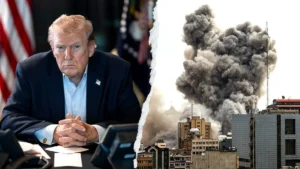
On the evening of June 14, 2026, Pakistani Prime Minister Shehbaz Sharif posted on X that a peace deal between the United States and Iran had been formally reached — and within minutes, President Donald Trump confirmed it on Truth Social. “The Deal with the Islamic Republic of Iran is now complete. Congratulations to all!” Trump declared, adding that he was authorizing the immediate removal of the US Naval blockade from the Strait of Hormuz.
The Strait of Hormuz, a narrow waterway between Iran and Oman, had been effectively blockaded since the conflict erupted in late February 2026. Before the war, nearly one-fifth of all global oil and liquefied natural gas passed through this route. Its closure sent energy prices skyrocketing and triggered supply shortages across Europe, Asia, and South Asia — including Pakistan.
Iran’s Supreme National Security Council confirmed the deal, stating that all military operations across every front — including Lebanon — would end “immediately and permanently” starting that night. The Memorandum of Understanding (MoU) was formally sealed on June 19, 2026, in Geneva, Switzerland.
// Pakistan’s Historic Role as Mediator
One of the most remarkable aspects of this deal is Pakistan’s central role in brokering it. Prime Minister Shehbaz Sharif personally announced the agreement before Trump, expressing deep appreciation to Qatar, Saudi Arabia, and Turkey for their support in the negotiations.
“Following intensive talks, we are pleased to announce that the Peace Deal between the United States of America and the Islamic Republic of Iran has been REACHED.”— PM Shehbaz Sharif, June 14, 2026
Pakistan’s mediation alongside Qatar has significantly elevated the country’s diplomatic standing on the global stage. This is widely seen as one of Islamabad’s most significant foreign policy achievements in decades, proving Pakistan can serve as a credible neutral broker between major world powers.
// What the 14-Point Agreement Contains
- ▸ Immediate and permanent termination of military operations on all fronts, including Lebanon.
- ▸ Both sides pledge to respect each other’s sovereignty and refrain from interference.
- ▸ A 60-day ceasefire window to negotiate a final, binding peace deal.
- ▸ Iran commits to never developing a nuclear weapon; enrichment talks continue under IAEA supervision.
- ▸ A $300 billion reconstruction and development fund for Iran, tied to compliance.
- ▸ The US commits to lifting all sanctions against Iran on an agreed schedule.
- ▸ Iran to work with Oman and Gulf states on Strait of Hormuz administration.
- ▸ Iran’s frozen $24 billion in US-held assets to be part of final deal negotiations.
// How the World Reacted
The response from world leaders was swift and largely positive. UN Secretary-General António Guterres congratulated both sides, calling it a “critical step towards the peaceful settlement of the conflict.” Leaders from the UK, France, Germany, and Italy jointly welcomed the deal, pledging to lift sanctions on Iran if it takes verifiable nuclear steps.
Financial markets erupted in relief: the S&P 500 surged 1.9% on Monday, and oil prices dropped nearly 5% — the sharpest single-day decline in months — as traders priced in the expected reopening of the Strait.
“I sincerely hope that this news, which the entire world has long needed, will pave the way for a lasting environment of peace and security in our region.”— Turkish President Recep Tayyip Erdoğan

// Key Timeline of the Crisis
US and Israel launch operations against Iran. Strait of Hormuz closed. 107 days of conflict begin.
Pakistan mediates indirect talks. A 45-day ceasefire proposed. Iran declines, seeking a permanent solution.
Trump announces the MoU is close. Discussions include uranium moratorium and sanctions relief.
PM Sharif announces on X. Trump confirms minutes later. Strait reopening authorized immediately.
Official signing ceremony in Switzerland. The 60-day countdown for final deal negotiations begins.
// What Remains Unresolved
- ▸ The fate of Iran’s nuclear enrichment program and highly enriched uranium stockpiles.
- ▸ Release of $24 billion in Iranian frozen assets depends on final deal compliance.
- ▸ Israel’s military posture in Lebanon, Gaza, and Syria creates ongoing uncertainty.
- ▸ Mine-clearing and infrastructure repairs in the Strait may delay full oil flow restoration.
- ▸ Iran will not negotiate further until the US fulfills its MoU commitments first.
// What This Means for Pakistan
For Pakistan, the implications are enormous. As a key mediator, Pakistan now stands at the center of a new Middle East diplomatic architecture. Economically, the reopening of the Strait of Hormuz means cheaper oil imports, reduced inflation pressure on Pakistani consumers, and restored trade routes through the Gulf.
Saudi Arabia, UAE, Kuwait, and Qatar — all of which had their oil exports severely disrupted — are expected to rapidly ramp up production. Pakistan, which imports a significant portion of its energy from these states, could see fuel prices stabilize over the coming weeks.
About The Author